August 22nd, 2026
My brother-in-law completed two years at a community college and two years at 4-year university before completing his degree in general business. During this time, he spent most of his days working as a manager for a trade business, driving trucks, managing crews and dealing with customers.
After he finished his degree, most of his career so far (current age 36) has been managing crews for construction businesses, so very similar to his earliest job. It begs the question, what value did college bring to his career?
According to an April 16th, 2025, article from the Federal Reserve of New York, for at least a quarter of college graduates, college does not appear to pay off.
For these students, pursuing a college degree has some risks, including not finishing their degree, taking on student loan debt and potentially having their career disrupted by AI.
Getting certified in a skilled trade is increasing in popularity. The construction trades face a shortage of workers. A skilled trade brings the possibility of higher income and less college debt but also brings challenges like heavy manual labor that can take a toll on physical health.
What if young people could get the best of both worlds?
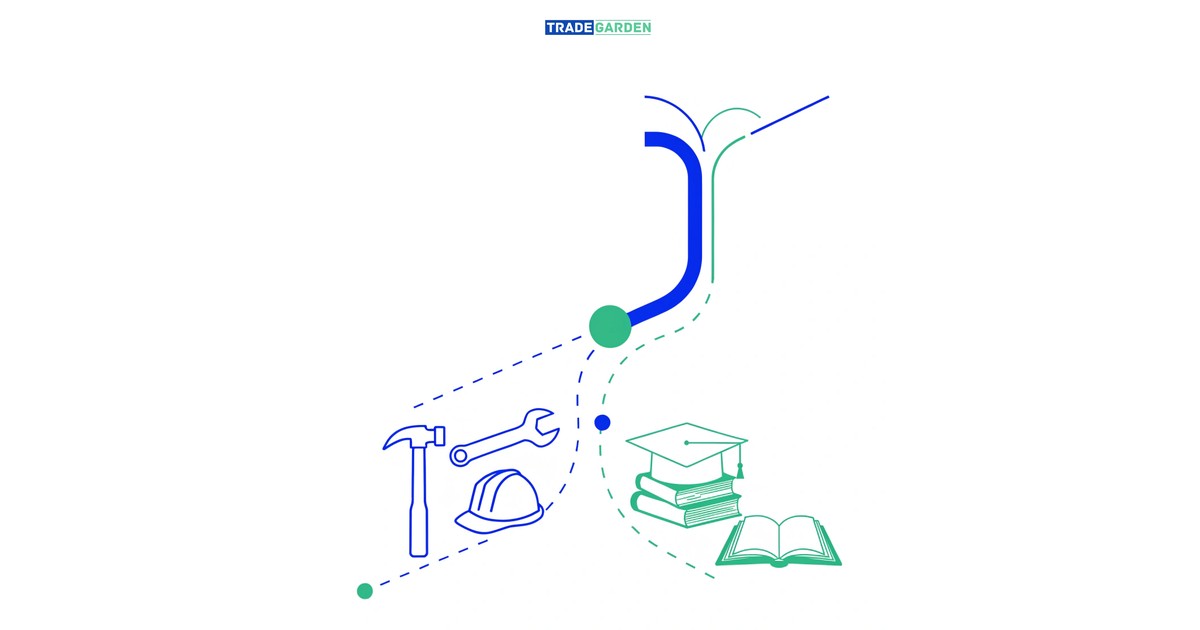
Perhaps students could pursue a hybrid or stacked education model—combining hands-on technical training, apprenticeships, and university degrees rather than treating them as an either-or choice.
Unfortunately, in the U.S. today, this hybrid path looks similar to a DIY home improvement project, where the student needs to do all the research and patch together a solution on their own. Possibilities include:
Community College Dual-Path / Associate Degrees
This is similar to the path my brother-in-law chose, except it starts with trade certification and transfers to a 4-year degree later. Similar programs include 2+2 programs where trade or technical credits roll over directly into a 4-year Bachelor of Science in Construction Management, Technology, or Engineering.
Examples include Colorado’s Statewide Transfer Articulation Agreements (with participating schools like Aims Community College and MSU Denver) guarantee that technical science tracks transition directly into university-level engineering and technology programs.
Trade Apprenticeships + Corporate/Business Management
This path is based on joining a registered union or corporate apprenticeship program where you get paid to train on the job and attend classes for free or cheap. The student then layers on a Business or Project Management Degree, taking online or part-time college courses in business administration, finance, or project management.
The Path Forward
While young people today would greatly benefit from having the option to do a hybrid of skilled trade plus university learning, the path is currently fragmented at best and will need to improve quickly if the U.S. wants to address a gap in skilled trades and improve earning outcomes for all.